


A few days ago, Meta launched Vibes, which it describes as “a new feed in the Meta AI app where you can create and share short-form, AI-generated videos.”
Alexander Wang, Meta's Chief AI Officer, posted a 1-minute teaser that gives a taste of the experience. Watch:
Personally, I could not make it to the end of the teaser as it felt like a fast-paced succession of meaningless, ultra-stimulating special effects that were not worth my attention.
My first thought was: do we need a new AI-powered feed that is even more frenetic and dopamine-triggering than predecessors like TikTok, Instagram Reels, and YouTube Shorts?
Children and teenagers today are less focused, worse readers, and obsessively glued to the screen, largely due to the impact of highly addictive, often manipulative, AI-powered social media feeds.
A recent survey found that 51% of U.S. teenagers spend at least four hours daily on social media, and another survey found that around 20% of young people spend more than two hours a day on TikTok.
Scrolling on social media steals precious hours that children and teenagers should be investing in more productive activities, such as reading:
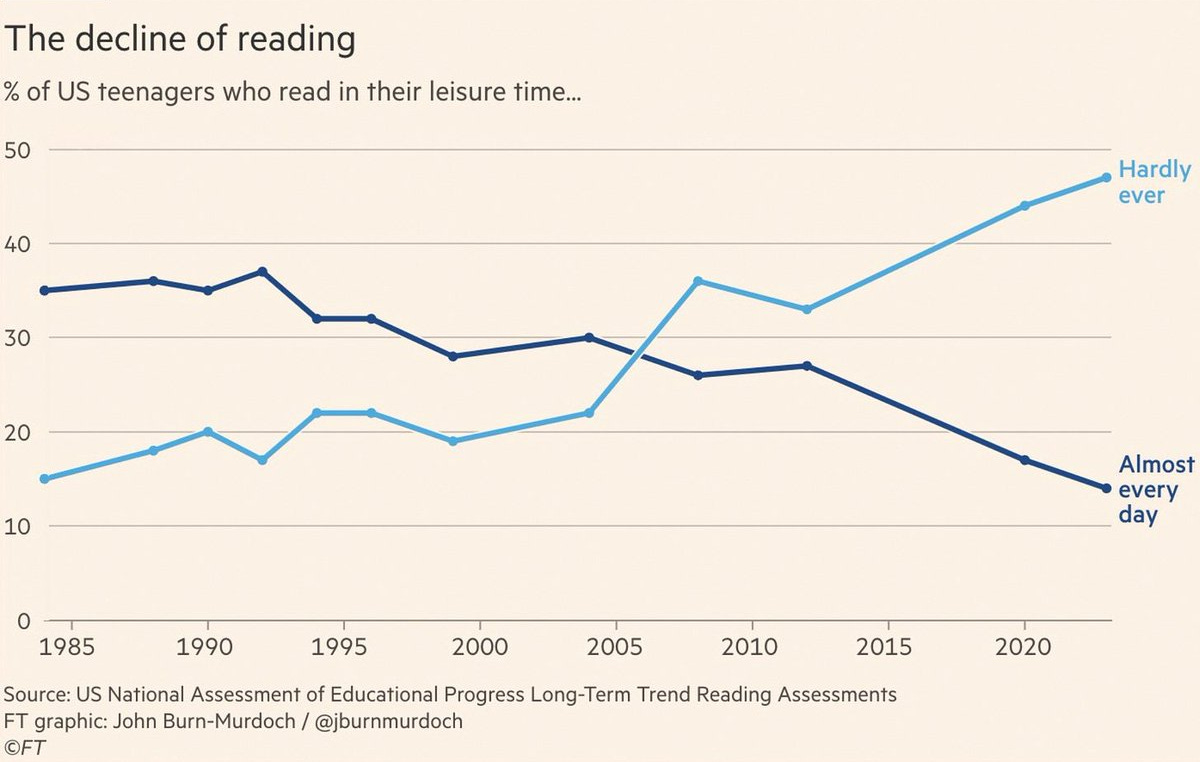
The 2024 National Assessment of Educational Progress reading evaluation of U.S. students concluded that in 2024, the average reading score at grade 12 was 3 points lower than in 2019. Compared to the first reading assessment in 1992, the average score was 10 points lower.
Not to mention other physical and mental health issues related to social media usage, which is heavily fostered by AI-powered, dopamine-triggering feeds.
Do we need to make AI feeds even more frenetic and potentially addictive, even though we have not yet found a solution to the negative implications of existing social media feeds?
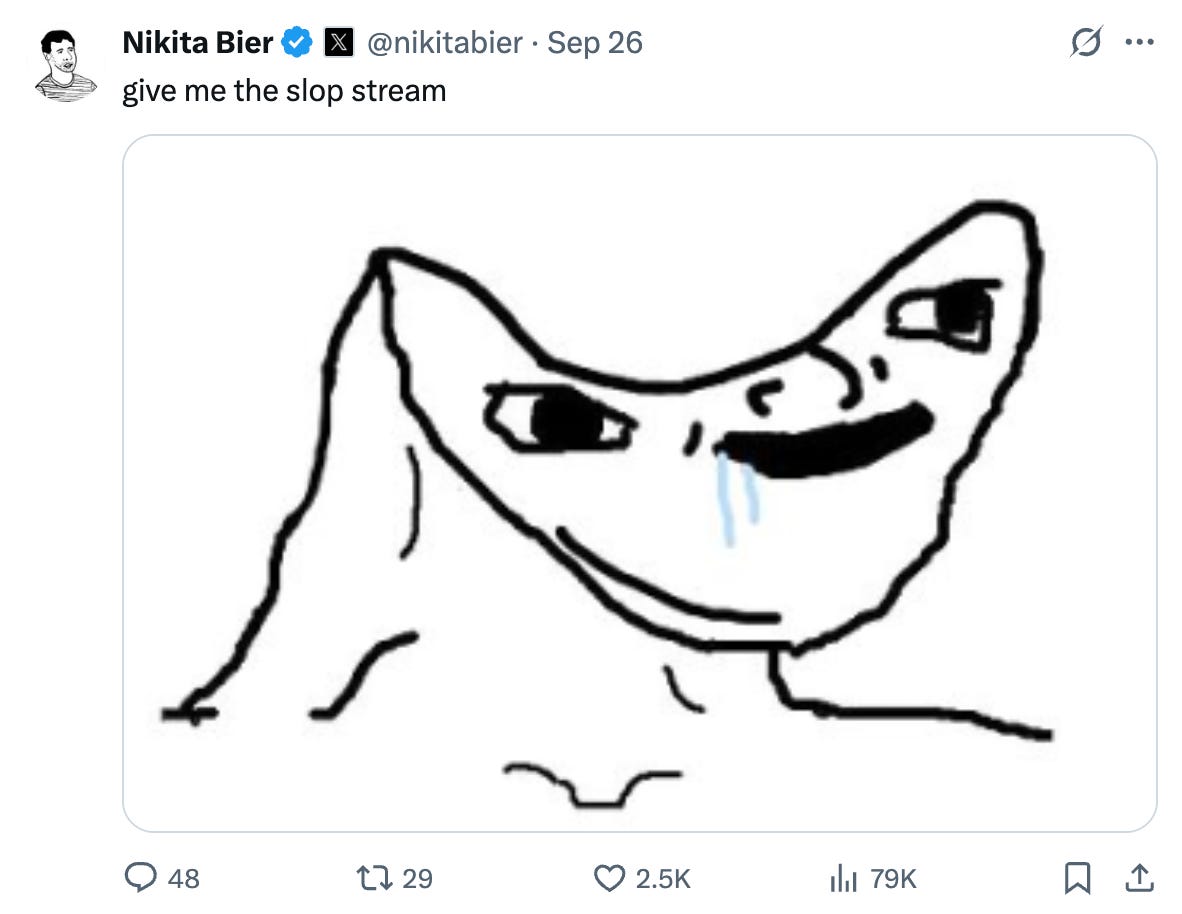
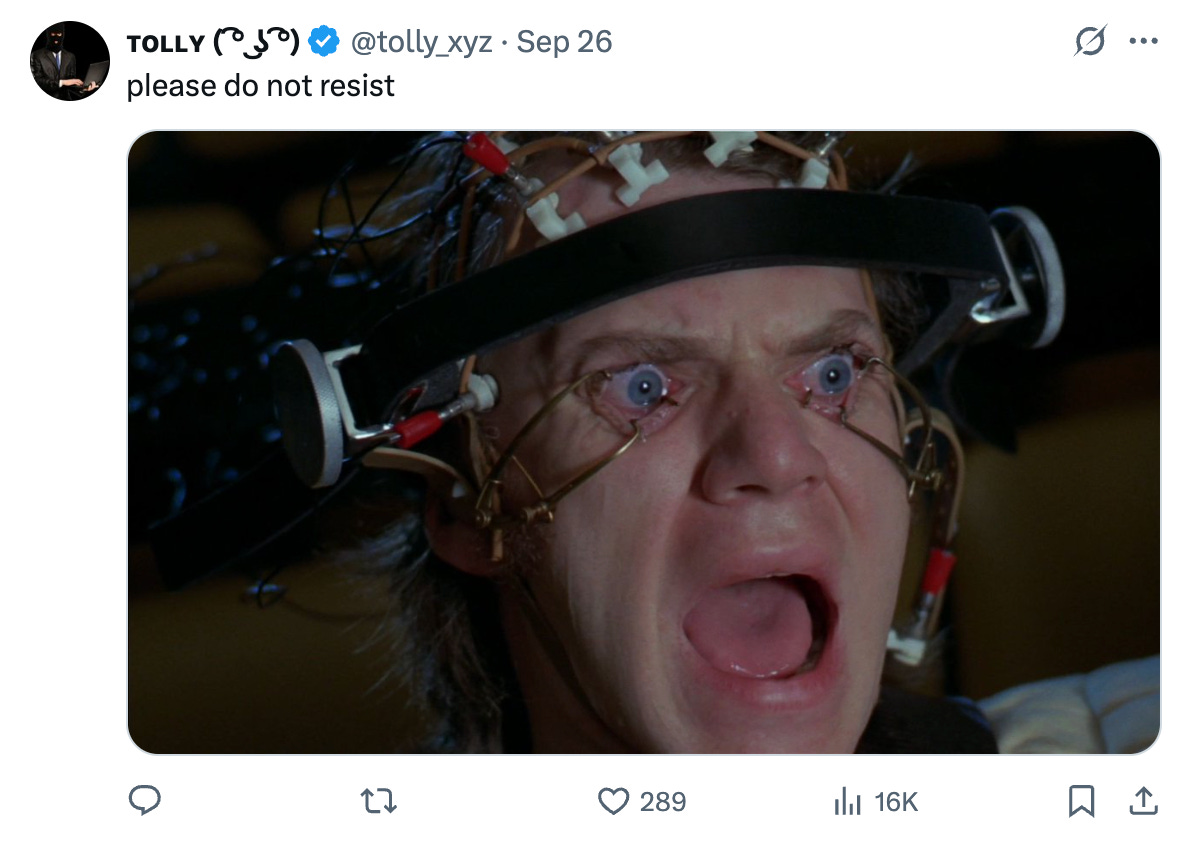
It seems that I am not alone with my concerns. Reactions to the launch of Meta's Vibes have been mixed, including:
Vibes also made me think about the future of art and creative work.
What will be the individual and collective implications of using AI algorithms to feed frenetic AI-generated videos to highly influenceable young audiences?
Will their brains get used to this fast-paced, ultra-stimulating, AI-generated content, and will human-made art seem too bland, too slow, and too boring?
Is it desirable from a social perspective? What type of individuals does this type of ‘techno-social engineering’ create?
Lastly, I also thought about the responsibility of the people building these AI feeds, which was wisely summarized by Yuchen Jin:
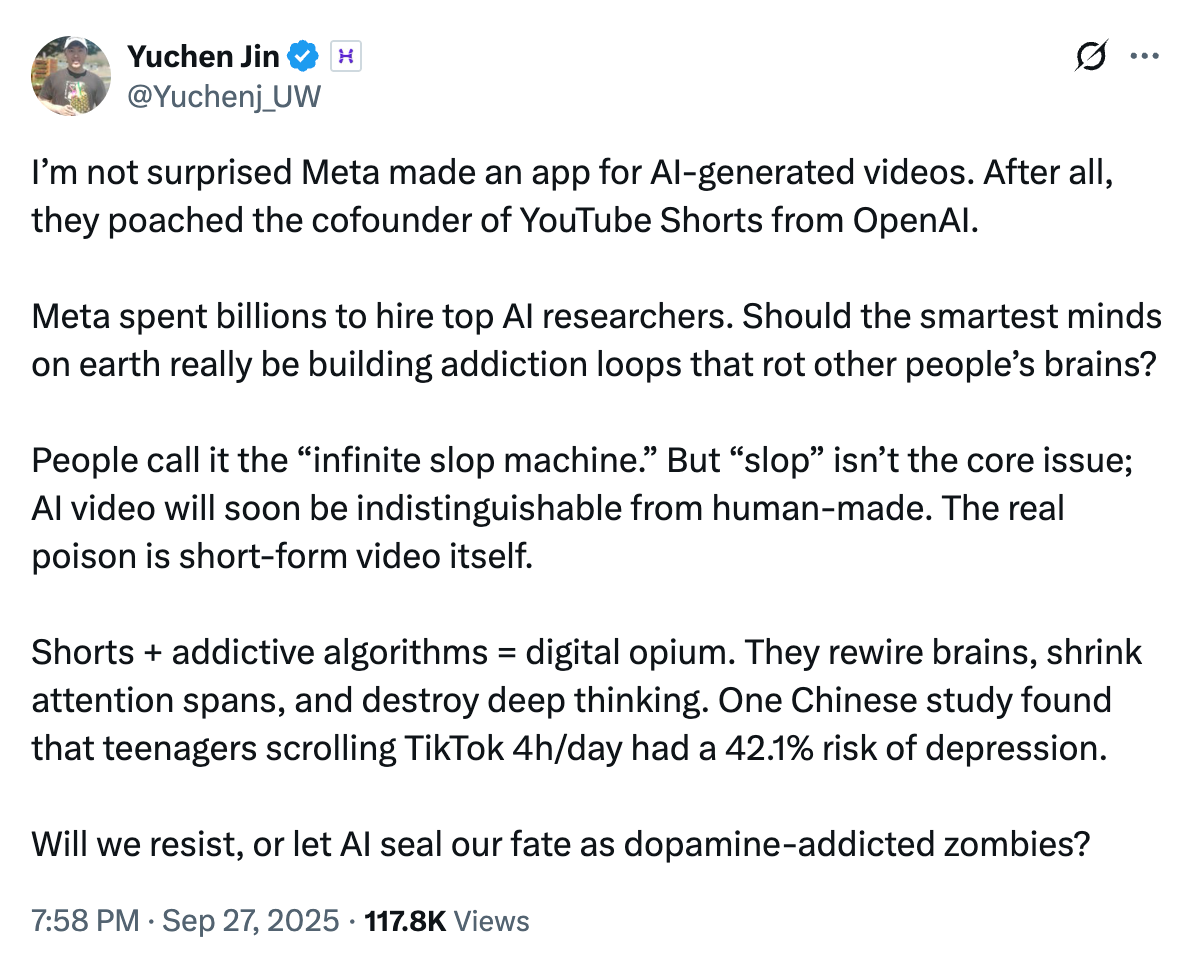
Reiterating his questions: should the smartest minds on earth be building addiction loops that rot other people's brains?
Will we resist, or let AI seal our fate as dopamine-addicted zombies?
As the old internet dies, polluted by low-quality AI-generated content, you can always find pioneering, human-made thought leadership here. Thank you for helping me make this newsletter a leading publication in the field.
nice work on the quiz, luiza!
An except from The Dick Lincoln Universe....2044:
"The word is a neologism introduced by Gen Beta, sometimes referred to as Gen AI (a pejorative nickname, meant to imply a collective, stunted creativity)."