

How AI Is Shaping Us
AI is already shaping millions of people, individually and collectively, although most people have not yet noticed. Remaining in control requires awareness and action | Edition #289


Humans are an extremely ingenious species, and throughout our history, an endless stream of technological inventions has dramatically changed how we live and thrive.
From sanitation systems to the printing press, from electricity to antibiotics, from optical fibers to MRIs, continuous human ingenuity and persistence have led to longer, healthier, and better lives for many.
The human spirit is (thankfully) constantly seeking new challenges, goals, and boundaries to overcome.
It is absolutely no coincidence that one of the most positive and impressive aspects of human history is the unstoppable curiosity that has led to a cumulative succession of new inventions, methods, theories, applications, and solutions.
From fire to AI, new technologies seem to fascinate us.
This fascination has a pragmatic side ("How can it help us survive, live better, or live longer?") and a more imaginative, symbolic, almost oneiric side, too ("What can we create with it, how can it empower us, and what limits can it help us overcome?").
Human technophilia has shaped how we survive, think, and evolve.
In a few thousand years, we have gone from scattered hunter-gatherer communities fighting for survival during harsh winters and droughts to an interconnected network of nation-states discussing the global governance of anthropomorphic machines with general cognitive capabilities.
But of course, it is not all roses, and human history has also been plagued by endless conflicts, exploitation, inequalities, injustices, tragedies, and suffering.
New inventions, regardless of how helpful they are, do not spread evenly, and in 2026, billions still lack access to safe drinking water or sanitation systems.
The internet has made the world more connected, increased billions of people's access to information, improved social mobility, and led to new economic opportunities for many. However, billions still remain offline.
Also, technologies are built and deployed within political and economic systems of power, and they are not, in themselves, neutral.
For some, a certain technology might bring opportunities, help them thrive, or be life-saving. For others, the same technology could lead to harm, isolation, and even death.
How a technology impacts people, both individually and collectively, will be directly correlated with the political, economic, and legal choices that will shape its development, governance, and oversight.
It will also be correlated with people's awareness and literacy levels about this technology, their exposure to it, and how they choose to interact with it.
Let me use social media as an example.
For the past 20 years, it has transformed how we interact with each other and with the world. Millions have successfully used it to express ideas, find a life partner, meet old and new friends, form communities, get a job, create and grow their businesses, access information, learn, protest, exercise their rights, and more.
On the other hand, millions have also been exploited, scammed, misled, deceived, bullied, surveilled, and in various other ways harmed through it.
Cognitively and psychologically, social media has also been shown to negatively impact focus, attention spans, sleep, memory retention, self-esteem, emotional stability, and mental health, especially in children and young adults.
It has also been affecting our bodies. Besides making many people more sedentary and incessantly attached to screens and devices during and after work hours, it has contributed to a musculoskeletal epidemic called tech neck:
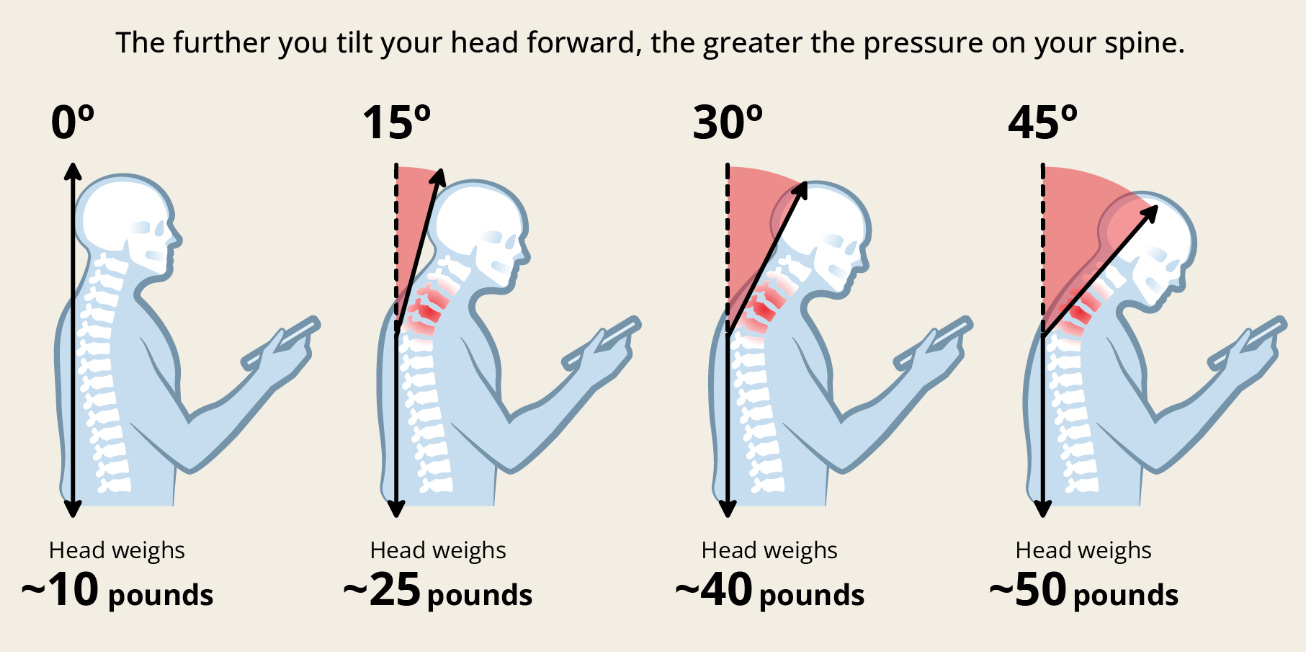
As 75% of the global population uses tech devices for hours a day, including to obsessively check social media and “doomscroll,” doctors have called tech neck an epidemic, prevalent among both adults and children, with symptoms ranging from neck, shoulder, and back pain, eye strain, anxiety, and potential lung and heart concerns.
Many people do not think much about it, but as living beings, our bodies and minds are constantly shaped by the environments, people, and things that surround us.
That is part of being alive: we are in constant transformation and exchange with what we are exposed to.
When we consistently use a technology, it inevitably shapes us, both mentally and physically, in ways we might not be aware of or that might be against our own personal goals.
Understanding how a technology works and how it affects us, and acting to ensure our principles, values, intentions, and goals are respected, is essential for remaining free, self-aware, and autonomous human beings.
More than three years after the generative AI wave became mainstream, here is how it is already shaping millions of people, both individually and collectively, and what you can do to stay in control: