


A few days ago, the United Nations’ independent scientific panel on AI released its preliminary report, offering its assessment of the capabilities, opportunities, and risks posed by AI.
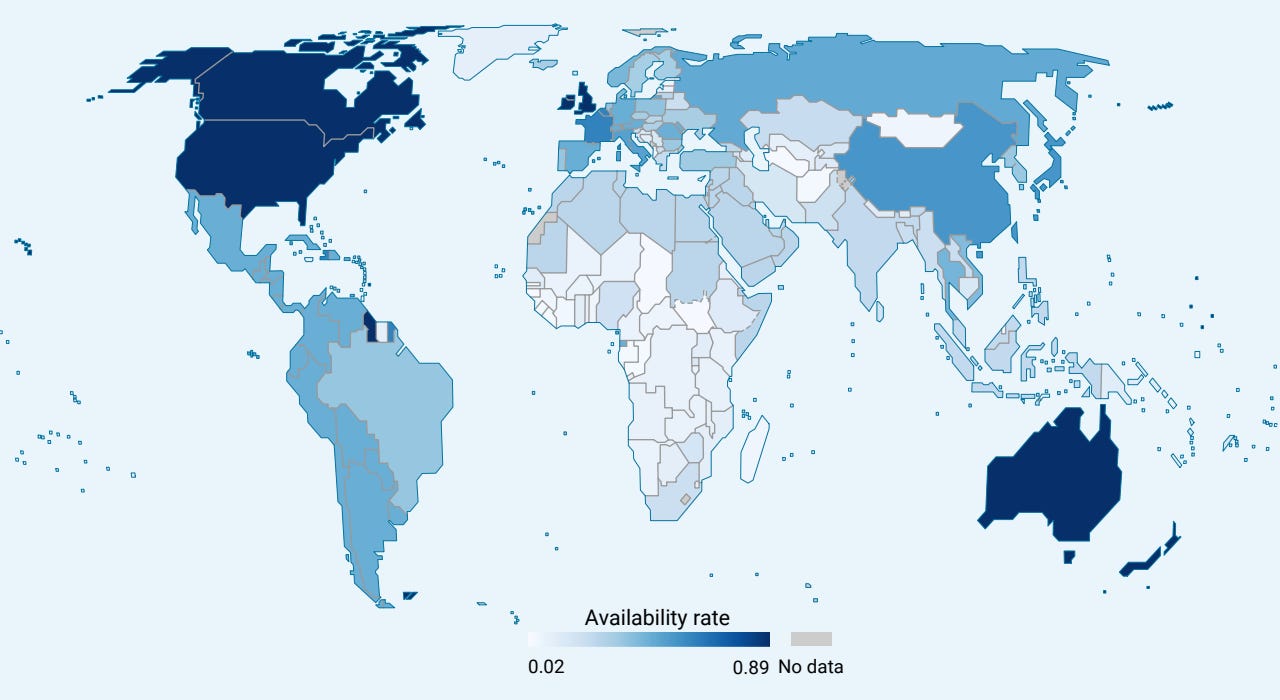
One of the report’s main observations was the current unevenness of AI deployment, AI risks, and the capacity to act on AI’s impact (although AI development and the wealth it creates are concentrated).
This UN panel and its assessments should be understood as one of the most important initiatives focusing on a global approach to AI, possibly (and hopefully) leading to stronger global AI governance measures.
As the AI race between China and the United States gets tighter and countries’ AI strategies get increasingly attached to their national security and geopolitical agendas, multilateral efforts are essential to increase transparency and cooperation, and to achieve least some level of global alignment on AI.
These are the report's key assessments:
1. Recent years have seen rapid, and in some areas, accelerating progress in a range of AI capabilities.
2. These gains have unlocked useful applications across science, health, agriculture, accessibility, knowledge work, and information technology, including in the development of AI itself.
3. AI adoption has accelerated broadly and unevenly across countries and sectors.
4. While the shift towards AI agents is underway, their future adoption and economic impacts will likely be shaped by continued improvements in their ability to accomplish knowledge work with little or no human oversight.
5. AI development entails risks, with potential negative impacts on human rights, social systems, and the environment.
6. Looking ahead, the gap between rapidly improving capabilities and effective risk management methods may lead to catastrophic outcomes.
7. AI risks are unevenly distributed across populations and countries, while AI development and the wealth it creates are highly concentrated.
8. Realizing the full benefits of AI while minimizing its risks requires good governance.
9. Policymakers seeking to shape this governance face an evidence dilemma: they need evidence to make informed consequential governance decisions, but by the time the evidence exists, it might be too late to make them, as the evidence lags behind the pace of AI development.
10. The capacity to act on existing evidence of AI risks and impacts is unevenly distributed.
11. Concrete next steps to close the above gaps exist, but each requires sustained investment in Member State capacity to shape, evaluate, and deploy AI.
I attempted to address governance from a systems perspective
https://mediate.com/systems-view-of-ai-governance/
Hi Luiza, your timing of the post is so spot on. Neptune became retrograde on 7th July. And now Saturn too just turned retrograde in the sky.
Both of them, especially Saturn brings in discipline to governance. So I think AI regulations will speed up globally soon now.
The challenges you mentioned are more likely to get resolved. Because this period( From July to December this year) sufficient enough for policymakers to go over those decisions.
EU's AI Act news came today. Let's look forward what happens next.