

AI-Driven Deskilling in Healthcare and Elsewhere
As more professionals become overly reliant on AI tools, AI-driven deskilling is about to become widespread across every occupation. We are not talking about it enough | Edition #300

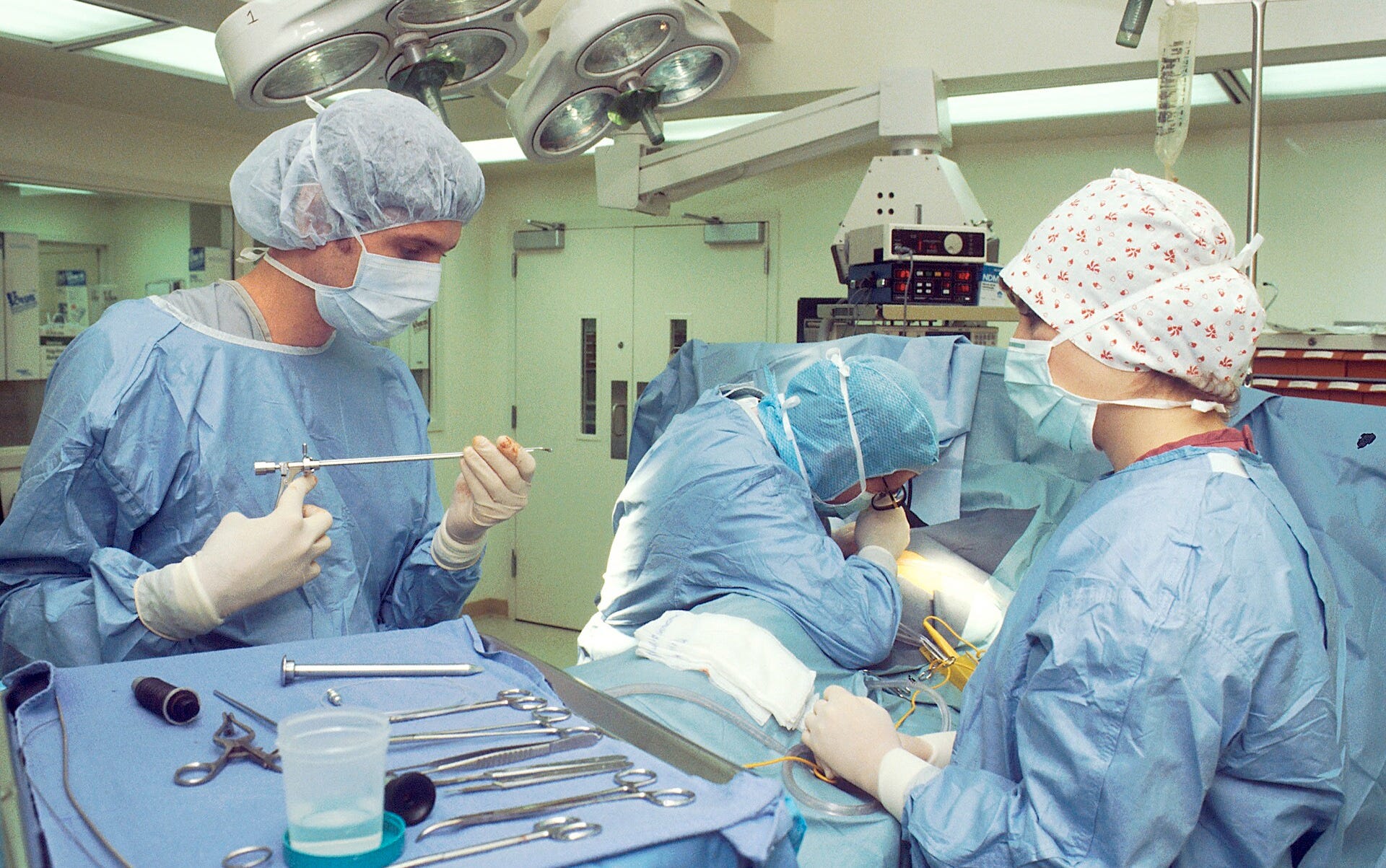
A study published in The Lancet, a peer-reviewed medical journal, offers an important warning sign of the risks of AI-driven deskilling in healthcare and elsewhere.
The study assessed the quality of colonoscopies during the three months before and after AI implementation, when doctors were not assisted by AI.
Specifically, it assessed the adenoma detection rate, which is the percentage of colonoscopies where doctors found at least one adenoma (a precancerous polyp in the colon or rectum).
These were the results:
Before the AI tool was introduced, the adenoma detection rate was 28.4%.
After the AI tool was introduced, the adenoma detection rate for colonoscopies performed without AI decreased to 22.4%.
The adenoma detection rate, a strong proxy for colonoscopy quality, fell by 6% after endoscopists were exposed to AI.
Therefore, exposure to AI negatively affected endoscopists' behavior and reduced the quality of colonoscopies performed without AI.
Before discussing AI-driven deskilling, let's first talk about the good news: AI is drastically improving the quality of colonoscopies and helping to save millions of lives.
How AI Improves the Quality of Colonoscopies
According to another study, AI-assisted colonoscopies demonstrated a 20% increase in the adenoma detection rate and a 55% decrease in the miss rate.
Another widely cited study found that each 1% increase in the adenoma detection rate was associated with a 3% decrease in cancer risk.
To contextualize (and if you or a loved one are about to undergo a colonoscopy), this is the relationship between adenoma detection and cancer, according to a medical website:
“Tubular adenomas are precancerous polyps in your colon or rectum. Healthcare providers often find them during routine colonoscopies to screen for colorectal cancer. Even though fewer than 9 out of 100 tubular adenomas become cancer, having them might be a very early warning sign that you have a higher risk of developing colorectal cancer. That early warning could help you reduce your risk.”
Therefore, AI is already revolutionizing the field of gastroenterology and helping to save countless lives by enabling earlier, more accurate detection of adenomas and preventing the development of colon cancer.
This is great news, and I am so happy to see it happen. The world is desperate for more news like this.
I am convinced that the majority of people undergoing a colonoscopy, if given the opportunity to choose, would gladly prefer their examining doctor to use an AI tool rather than not, if they knew the detection rate was significantly higher without additional risks.
Now, let us go back to the deskilling issue.
The AI-Driven Deskilling Problem
The AI tool improves adenoma detection rates and is a welcome development in the field of gastroenterology.
But we now also have documented signs that after doctors start using AI to perform colonoscopies, their unassisted detection skills decline significantly.
In addition to having great AI tools to help detect early signs and prevent disease, it is also in the interest of patients and the healthcare system that doctors remain skilled at detecting benign and malignant signs even when AI tools are unavailable.
If the AI tool is offline or under maintenance, if it is hacked or unavailable on a specific day, if the doctor is relocated to a hospital without the AI tool, if global geopolitics suddenly impact the AI tool's availability in a given market, or if any other reason forces the doctor to perform a colonoscopy without AI assistance, patients would be at higher risk because this doctor is not as skilled as they were before the introduction of the AI tool.
This will happen in healthcare, coding, and many other contexts where AI tools are becoming prevalent and where people are becoming overreliant on them.
The Lancet study is a warning sign, and I do not think we are talking about AI-driven deskilling as much as we should.
We might not care if we lose our math or geolocation skills after depending on calculators and navigation apps like Waze for so many years.
However, when AI tools become available for every cognitive skill we possess, we should start caring about the risk of broader deskilling, especially in professionally relevant skills.
Delegating our personal and professional development and decision-making agency to AI tools in the name of efficiency might make us fully dependent on these tools, to our own detriment, and to the detriment of society at large.
Junior professionals may never get the chance to fully develop their expertise because they constantly rely on AI tools.
Senior professionals who are exposed to AI tools and become overreliant on them might lose their long-standing skills and be unable to work confidently when those tools are unavailable.
In medicine specifically, AI tools can significantly improve the accuracy, quality, and speed of diagnosis and treatment across various conditions, and they are already saving millions of lives.
I sincerely hope that each and every AI company is dedicating significant time and money to developing these types of AI tools and helping to save and improve the quality of many more lives.
At the same time, doctors and the healthcare system should also be able to provide high-quality treatment when AI tools are unavailable (as they did before these tools were introduced).
New doctors should learn to diagnose and treat patients with and without AI, as their peers did before AI tools were available.
Regarding all other occupations, professional development should not mean simply “knowing how to pilot a series of AI tools,” as they could malfunction, be hacked, or, for whatever reason, be unavailable.
Society will benefit from a worldview that puts humans at the center. That means professional development should focus on confidence, accuracy, and high performance, both with and without AI assistance.
AI can be enormously helpful, especially when professionals are skilled enough to know how to use it, when not to use it, when its outputs are wrong, and what to do when it is not available.
Pretty interesting read, thanks for sharing!
The 6% decline is alarming on its own but the property that makes it genuinely dangerous is that it's invisible to the person experiencing it. The endoscopists didn't know their detection rate dropped. They performed the colonoscopy the same way they always had. They looked at the same tissue. They just stopped seeing things they used to see, because the AI had been doing the seeing for them and the pattern recognition had quietly degraded without anyone noticing.
That's the core of the deskilling problem and it's the reason awareness campaigns and training protocols can't fully solve it. You can't train someone to notice a skill loss they can't perceive, because the skill that's eroding is the same faculty they'd use to detect the erosion. A doctor who's lost 6% of their detection ability doesn't feel 6% less confident. They feel exactly the same. The patients look the same. The procedure feels the same. The adenoma they missed looks like healthy tissue to them now, and it looked like healthy tissue to them before the AI was introduced too, except before the AI it wasn't there and now it is. The deskilling doesn't announce itself. That's what makes it different from every other risk on the list.